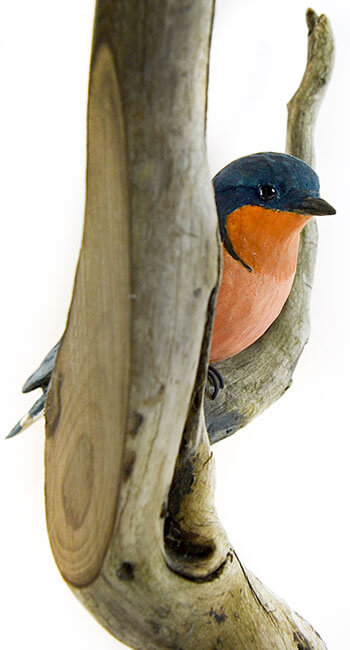

Over the years I have honed my own rustic style of carving and coloring song birds. I whittle Northern White Pine and apply a stain that I make from a blend of mineral spirits and enamel. With these modest materials I create simple bird specimens that, upon close inspection, reveal the beauty of the wood used to craft them. Finally, all of my pieces are mounted with steel legs and feet onto natural pieces of weathered wood that I have collected on my travels.
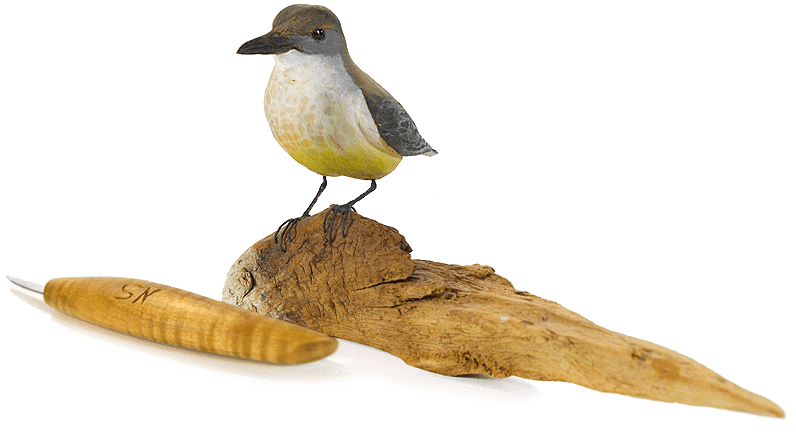
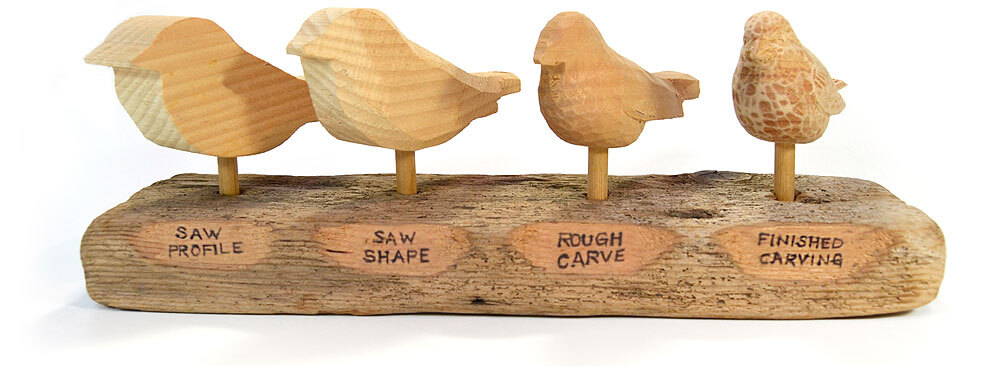
My birds are always carved in Northern White Pine. This native softwood carves easily using only a simple “bench knife”, a basic knife in any collection of carving tools. White pine also compliments my coloring system better than some other woods commonly used by carvers. In the old growth, mixed forests of eastern North America, the northern white pine towers over the other trees, providing food and shelter for many of the same birds that I carve.
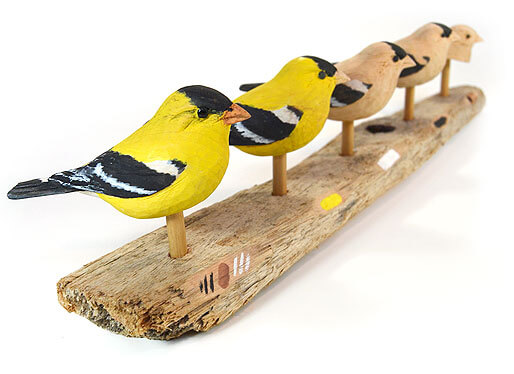
I developed the color system myself more than 30 years ago. I needed to color a cardinal, but all I had in my shop at the time was a can of thick red enamel. I used mineral spirits to thin the enamel to the consistency of a stain. The result complemented my simple carving style perfectly. I was so pleased with the result that I never experimented with the Acrylic paints used almost exclusively by other wildlife carvers.
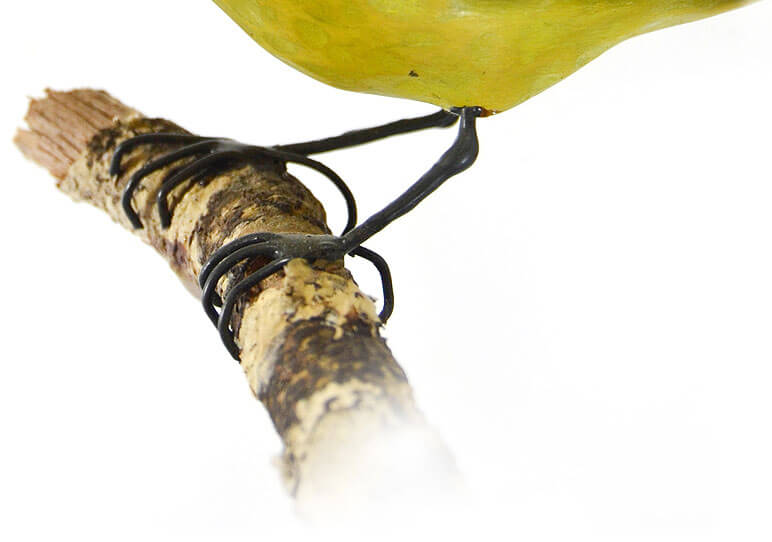
For the legs and feet of each bird I use ordinary steel wire and a small amount of epoxy. This creates a durable connection with the mount, and when painted, looks very realistic. My birds are mounted either horizontally to sit on a table or vertically for hanging on a wall. Most of my mounts are made from weathered wood that I have collected along the way. On trips, my friends know to expect me to bring an empty duffel bag or reserve prime storage space on my boat for the driftwood, abandoned fence posts, and gnarly tree limbs we happen to pass.